Free Camping in Greece. Is it allowed?
By Photis · Greek Travel Guides
Some links are affiliate links. We may earn a commission if you book.
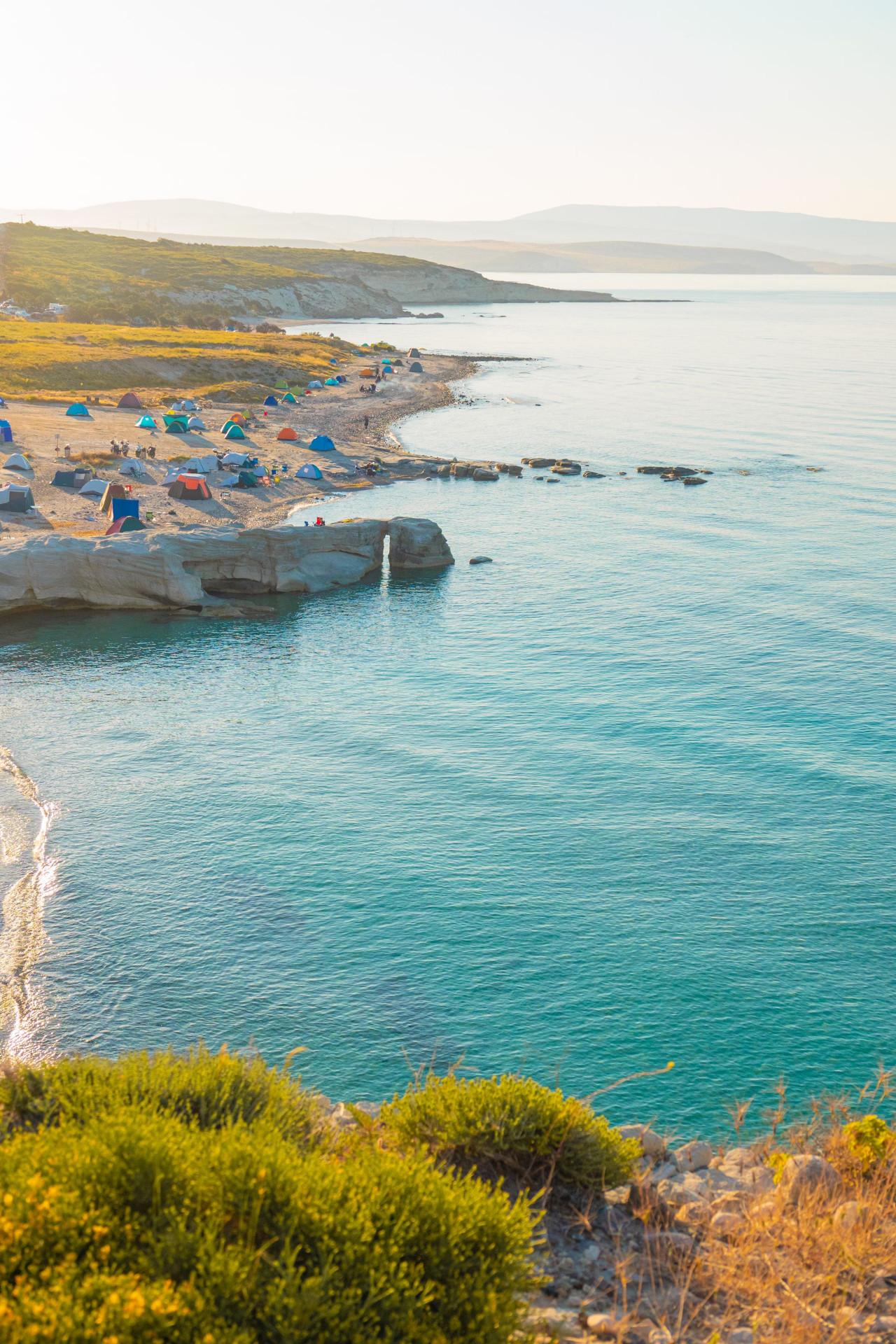
Greece is famous for its summer and many will choose free-camping to spend their holidays — but what does the law actually say?
Greece is famous for its summer — but what about the law on free camping?
Free campers should be aware that camping in an undetermined area is expressly prohibited by law, with the exception of areas specifically designated for this purpose.
The identification of such areas is a matter for the relevant municipal authority. For example, the municipal authorities of Tilos give permission to free campers. The same regime in previous years was in Anafi, Gavdos and Nisyros. On the contrary, on the beaches of Crete, Samothraki and the Small Cyclades, authorities are "hunting" free campers.
The basic legislation
The basic legislation on free camps is Law 392/1976 (ΦΕΚ Α' 199/1976) — "Establishment and operation of organized camping sites and other provisions".
This law prohibits the installation of tents and the parking of caravans in archaeological sites, seashores, beaches and generally public spaces.
Under current law, the police have the right to capture free campers on their own initiative. Free-camping enforces penalties of a criminal nature that do not exceed one year's suspended sentence. However, if the camper is arrested lighting a fire in a forest area or polluting a protected Natura 2000 area, the penalty may be up to five years.
In practice
- Always check with the local municipality.
- Choose organised campsites — Greece has hundreds, many right by the sea.
- Never camp on archaeological sites or in protected nature areas.
- Be respectful — pack out everything, never light fires, and don't damage the landscape.
Free-camping responsibly can be one of the most beautiful ways to experience Greece, but always know the rules first.