The Historical Guide For The Island Of Delos
By Photis · Greek Travel Guides
Some links are affiliate links. We may earn a commission if you book.
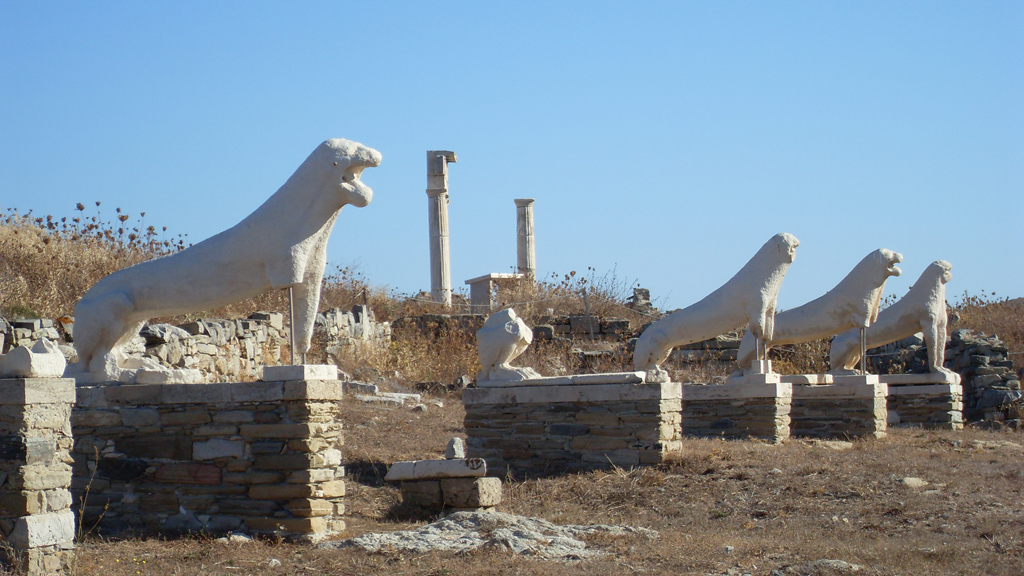
Delos is a Greek island near Mykonos — the "Sacred Island" — birthplace of Apollo and Artemis according to Greek mythology.
Delos is a Greek island near Mykonos
It is given the attribute of the "Sacred Island" due to its importance as a sanctuary during Antiquity. According to Greek mythology, Delos was the birthplace of the Goddess Artemis and the God Apollo.
Delos. Photo source: Wikimedia Commons
The origins of the name: The island of Delos is featured in many poems and is described as a floating rock that was anchored with diamond columns to the sea bed in the heart of the Aegean, when the Titaness Leto gave birth there to her children Apollo and Artemis. Round the sacred island of Delos, the islands joined in a circular dance (cyclos = circle), so they were named Cyclades.
Historical Background Of Delos
Archaeological investigations have shown that the earliest site in Delos to be inhabited was Mount Cynthus (around the 3rd millennium BC). According to Thucydides, the first inhabitants of the island were pirates from Caria, who were eventually expelled by King Minos of Crete.
Thanks to Homer, we know that the "Sanctuary of Delos" was devoted to God Apollo, as he was born there. It is situated in the most protected bay of the island, on the ruins of the Mycenaean settlement (2nd half of the 2nd millennium BC).
What to see
- Terrace of the Lions — the famous archaic marble lions standing guard over the sacred lake.
- Sanctuary of Apollo — the heart of the island, with temple ruins and treasuries.
- Theatre Quarter — wealthy Roman-era houses with stunning mosaics still in place.
- House of Dionysus & House of the Masks — for some of the best-preserved ancient floor mosaics in Greece.
- Mount Cynthus — climb to the top for incredible panoramic views.
Visiting
Delos is uninhabited today and can only be visited by day-boat from Mykonos. The boat ride takes around 30 minutes. Wear good shoes, bring water and a hat — there is no shade. Allow at least 3–4 hours to explore.